

Frequently Asked Questions
-
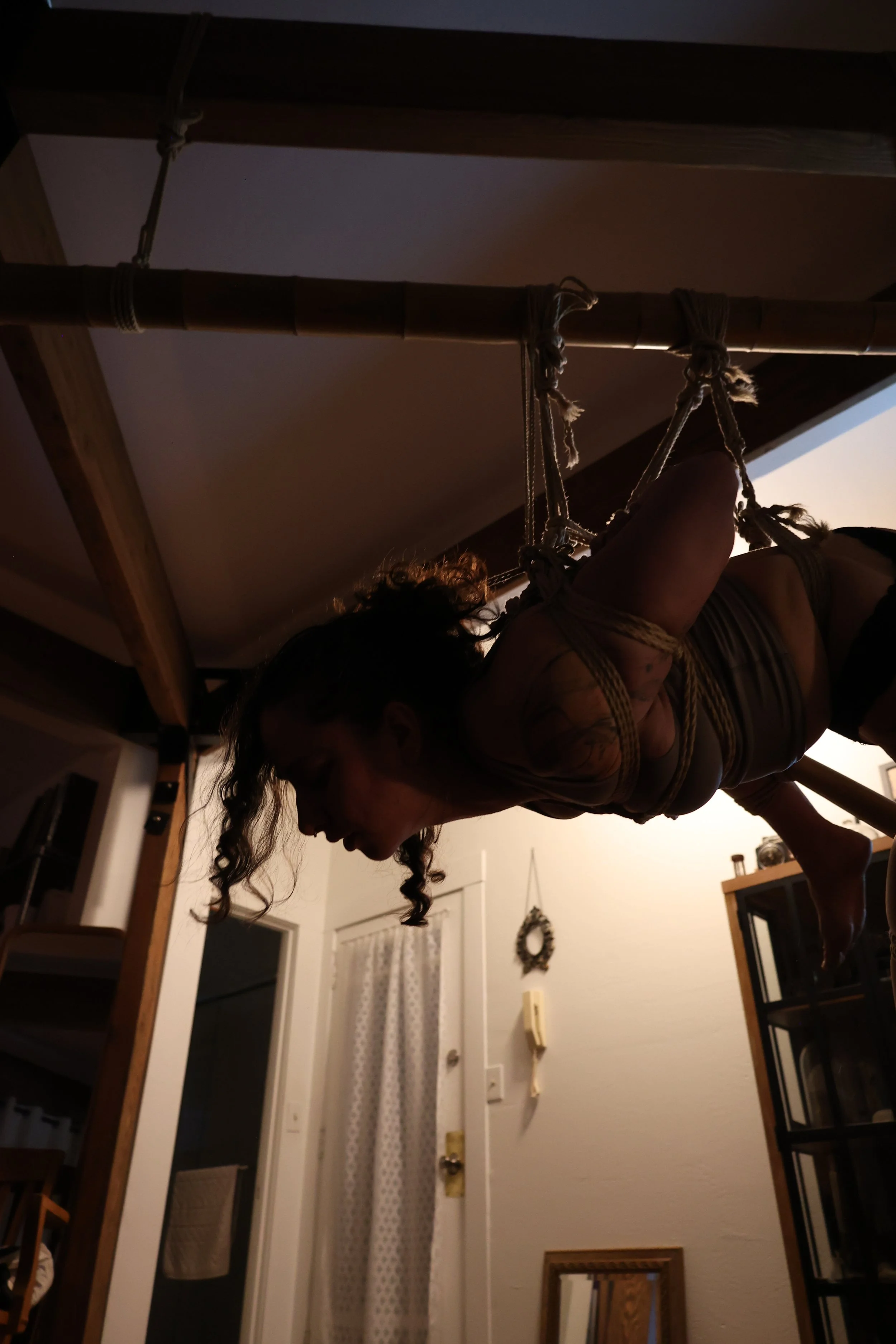
In Japanese, the word shibari simply means “a tie.” One could shibari a gift box or a shoe, for example (the word kinbaku is a more specific word that refers to an erotic rope bondage practice, however both “kinbaku” and “shibari” can be used to describe what I do). The term “Western bondage” usually refers to a specific bondage aesthetic from a specific era — think damsel in distress on the railroad tracks.
In shibari, it’s the process more than the final position that matters. When I tie I pay great attention to your experience from the moment we settle in to after the last rope has come off. There is no final bondage position to achieve, but rather a conversation to have with ropes.
As the practice and aesthetics of shibari have been transmitted from Japan to Europe and North America for several decades now, a variety of Western practitioners have brought their own perspective to the practice, and it’s a perspective that is distinct from “Western bondage.” Or rather, this cultural influence and exchange doesn’t simply describe some sort of hybrid approach, but a new and emergent thing.
Throughout this site I use the terms shibari and rope bondage fairly interchangeably. I've studied Japanese bondage techniques extensively with Japanese teachers, and I’ve learned from many European educators who have infused their practice with elements of their own cultural perspective. These days I describe my practice as a European take on a Japanese art form. -
Rope bondage, especially suspension, carries real risk. If you've done your own research you may have questions about nerve compression and suspension injuries. These are risks that are more or less present depending on the specifics of the ties we do. We go over safety before any rope goes on and together craft a plan that matches your personal risk profile. I manage that risk with significant anatomical knowledge, continuous check-ins, and over a decade of practice. I can't eliminate risk, but we can handle it with knowledge and care.
-
No. There’s no sexual touch nor power exchange in sessions. Shibari involves sensation, vulnerability, and embodiment, and for some people it feels connected to their erotic selves. If that's part of what draws you here, it's welcome.
-
Yes, and I'd encourage it! Having a person you trust in the room might be really key to you feeling safe and comfortable. Your partner gets the added benefit of witnessing you through a unique journey.
-
Absolutely! I’m currently very interested in trades for:
CSA shares/local food
Kiln space
Tattoos and piercings
Bodywork, herbalism, and acupuncture
Curly cuts and lash extensions
Accounting help!
That said, please be in touch if you have something you’d like to offer as trade!